


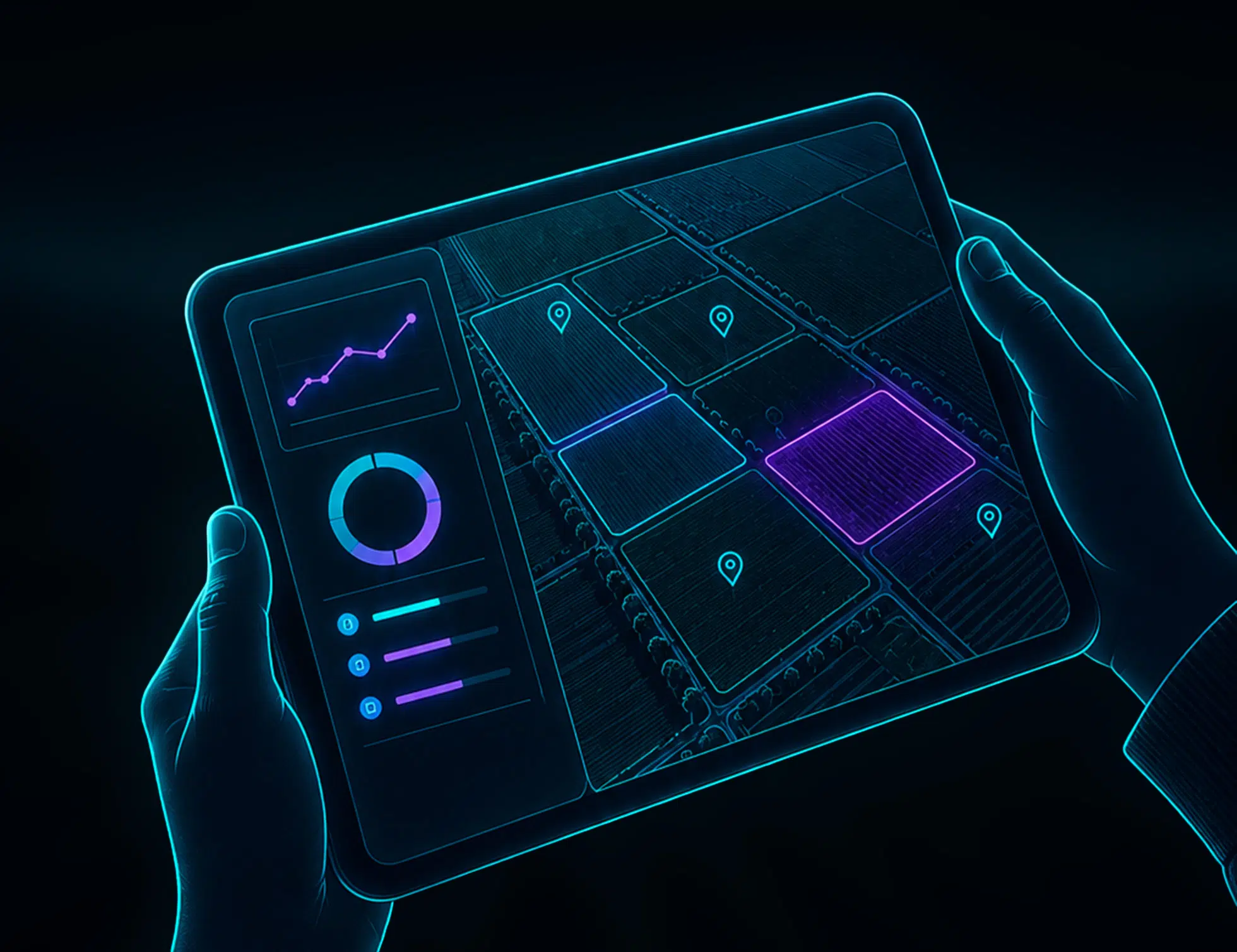
AI in agriculture is changing how modern farms make decisions, not by replacing growers, but by helping them see risk, timing, and resource needs earlier. From crop monitoring to irrigation planning, AI gives farms a clearer view of what is happening in the field and what is likely to happen next. For operations facing labor pressure, volatile weather, input costs, and tighter margins, smarter decision-making is becoming essential.
The business case is also growing. One 2025 market analysis estimated the global AI in agriculture market at $4.7 billion in 2024, with projected annual growth of 26.3% through 2034, driven largely by demand for precision farming. In the United States, federal agriculture strategy also points to AI, advanced analytics, and data-informed decision-making as tools for more efficient operations and stronger rural outcomes.
From Field Data to Better Decisions
Modern farms already generate data from sensors, equipment, satellites, drones, weather systems, and management platforms. The problem is that data often lives in separate tools. AI in agriculture helps connect those signals and turn them into practical recommendations: when to irrigate, where to scout, which field zones need attention, or how changing weather could affect yield.
Instead of waiting for a visible problem, teams can act earlier. A grower may compare soil moisture, crop stage, rainfall forecasts, and historical yield data before deciding how much water to apply. That shift from reactive work to predictive planning is where AI creates real operational value.
Precision Farming With Human Judgment
AI in agriculture works best when it supports human expertise. Farmers and agronomists understand local soil, field history, equipment limits, and market realities. AI can process more variables at higher speed, but people still decide what is practical, profitable, and safe.
This balance matters because precision agriculture adoption is uneven. U.S. government research has found that technologies such as yield maps, soil maps, and variable-rate tools are used heavily in some crops, but only on 5% to 25% of planted acreage for several others, including winter wheat, cotton, sorghum, and rice. Better integration, simpler interfaces, and clearer ROI can help close that gap.
Smarter Crop Monitoring and Yield Forecasting
One of the strongest use cases for AI in agriculture is crop monitoring. Computer vision can analyze images from drones, satellites, or field cameras to identify stress, pests, nutrient deficiencies, or disease symptoms earlier than manual scouting alone. When these insights are paired with location data, teams can prioritize action by field zone instead of treating every acre the same.
Yield forecasting is another high-value area. AI models can combine historical yields, planting dates, weather trends, soil characteristics, and crop health signals to estimate production more accurately. These forecasts help farms plan storage, labor, logistics, sales, and risk management with fewer surprises.
Resource Optimization for Water, Fertilizer, and Energy
Margins in agriculture are often shaped by input decisions. Applying too much water, fertilizer, or energy increases cost and can harm sustainability. Applying too little can reduce yield. AI in agriculture helps teams evaluate field conditions in real time and recommend more precise actions.
For irrigation, AI can analyze soil moisture, evapotranspiration, weather forecasts, and crop stage to guide scheduling. For fertilizer, it can support variable-rate recommendations based on soil data and expected crop needs. For energy, it can help optimize equipment timing, cold storage, pumps, and controlled-environment systems.
Automation Without Losing Control
Farm automation technology is advancing quickly, but the smartest systems keep humans in control. AI can trigger alerts, recommend tasks, prioritize work orders, or route information to the right person. In more advanced operations, it can support autonomous equipment, robotic scouting, or automated greenhouse adjustments.
The goal is not to remove decision-makers. The goal is to reduce repetitive monitoring, surface high-priority problems, and give teams more time for strategy. This is especially valuable when farms manage multiple sites, seasonal labor constraints, or complex supply chains.
Why Dashboards Matter
AI in agriculture becomes more useful when insights are visible in one place. A real-time dashboard can show crop conditions, alerts, irrigation status, equipment performance, yield forecasts, and task progress. It can also show confidence levels, so teams know which recommendations need human review.
This is where Kenility’s strengths are especially relevant. Kenility helps organizations use AI-powered automation, intelligent integrations, and real-time analytics dashboards to improve operations and customer interactions. The same principles apply to agriculture: connect systems, automate repetitive work, and give leaders actionable insights when decisions matter most.
How Modern Farms Can Start
The best way to adopt AI in agriculture is to start with a specific operational question. Which crop risk do we need to detect earlier? Where are we wasting water? Which decisions take too long? Which manual reporting tasks consume the most time?
From there, farms can run a focused pilot, connect the right data sources, define success metrics, and measure results over a full decision cycle. This approach reduces risk and makes value easier to prove before scaling across more fields, crops, or processes.
Smarter Decisions Start With Better Data
AI in agriculture is not just a technology trend. It is a practical path to better decisions, stronger resilience, and more efficient resource use. The farms that benefit most will be the ones that combine field expertise with connected data, clear workflows, and measurable outcomes.
We can help turn that vision into action. If your organization is exploring smart farming, predictive analytics, AI dashboards, or automation for agricultural operations. Talk with us today, together, we can design AI solutions that help modern farms make smarter decisions with confidence.